Chasing Light and Color: Lucknow’s Festival Soul Through My Lens
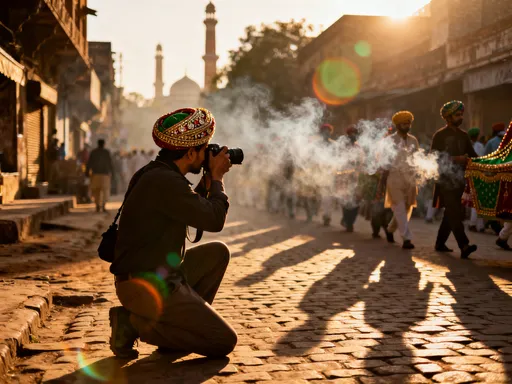
You know that feeling when a place just comes alive in your camera? Lucknow hit me like a burst of saffron, gold, and music. I went for the food, honestly—but stayed for the festivals. The way light dances on embroidered turbans during Muharram processions, the sudden hush before a classical performance at a Nawabi courtyard—it’s raw, real, and absolutely photogenic. If you’re into capturing culture that feels alive, Lucknow’s festival rhythm is pure magic through the viewfinder. This isn’t a city that performs for tourists; it lives its traditions with quiet dignity, and that authenticity is what draws the lens like a magnet. Every corner hums with stories waiting to be seen, not staged.
Why Lucknow? More Than Just Kebabs and Chikankari
Lucknow, the capital of Uttar Pradesh, stands apart in India’s cultural landscape—not for grand monuments or tourist thrills, but for its deep-rooted refinement and layered history. Once the seat of the Nawabs of Awadh, the city inherited a legacy of elegance, poetry, and spiritual harmony. It is here that Persian influences blend seamlessly with Indian traditions, giving rise to a unique aesthetic—one that values grace over grandeur, subtlety over spectacle. While many travelers know Lucknow for its melt-in-the-mouth kebabs and exquisite chikankari embroidery, few truly grasp the depth of its festival culture. These celebrations are not performances for outsiders; they are intimate expressions of community life, woven into the fabric of daily existence.
What makes Lucknow exceptional for visual storytelling is its rhythm. Unlike the frenetic energy of Mumbai or the spiritual intensity of Varanasi, Lucknow moves at a measured pace—a slow cadence that allows the observer to truly see. This unhurried atmosphere creates space for moments to unfold naturally, making it ideal for photographers seeking authenticity over cliché. Festivals here are not isolated events but threads in a continuous cultural tapestry. Whether it’s the solemn processions of Muharram, the quiet preparations for Diwali in narrow galis, or the joyful gatherings during Eid, each occasion reveals a different facet of the city’s soul.
Yet, Lucknow remains underrepresented in mainstream travel photography. It doesn’t advertise itself loudly, nor does it cater to mass tourism. This relative obscurity, however, is precisely what makes it so rewarding to explore through a lens. There are no staged photo ops, no crowds of influencers vying for the same shot. Instead, you find real life—unfiltered, unposed, and deeply moving. For photographers who value connection over clicks, Lucknow offers a rare gift: the chance to witness culture as it is lived, not performed.
The Pulse of Festival Culture: Where Tradition Meets the Street
In Lucknow, festivals are not confined to temples, mosques, or official venues—they spill into the streets, courtyards, and homes, becoming part of the city’s shared breath. These are not calendar events marked by fireworks and fanfare alone; they are lived experiences, shaped by generations of tradition and community memory. The emotional weight of these occasions translates into powerful visual moments—fleeting, unrepeatable, and deeply human. It’s in these organic expressions that the true essence of Lucknow reveals itself to the patient observer.
Muharram, for instance, is observed with profound reverence across the city. The processions, known locally as juloos, wind through the old neighborhoods with a quiet dignity that is both solemn and stirring. Men walk barefoot, their faces etched with devotion, carrying alam—metal standards representing the martyrdom of Imam Hussain. The atmosphere is heavy with emotion, yet there is no theatricality. It is a collective act of remembrance, not a spectacle. For a photographer, this presents a rare opportunity to capture raw human feeling—grief, faith, solidarity—without the distortion of performance.
Diwali, though more widely celebrated across India, takes on a distinct character in Lucknow. In the older parts of the city, homes are lit not with neon displays but with rows of earthen diyas, their warm glow reflecting off centuries-old haveli walls. Children run through alleys with sparklers, their laughter echoing under archways draped in fairy lights. There’s a sense of intimacy, of celebration contained within community spaces rather than broadcast to the world. These quieter moments—grandmothers arranging sweets, families stringing marigolds, neighbors sharing sweets—are often the most compelling to photograph.
Eid, too, unfolds in private yet visible ways. Courtyards fill with the aroma of biryani and sheer khurma as families gather for prayers and feasts. Women in vibrant shararas step out of homes adorned with fresh paint and floral garlands. The joy is palpable but restrained, expressed in shared glances and gentle gestures rather than loud declarations. These are the moments that resist cliché—the soft smile of an elder handing a child a gift, the careful folding of prayer mats, the way sunlight catches the edge of a gold-threaded dupatta. In Lucknow, festivals are not about excess; they are about presence, and that presence is what makes them so profoundly photographable.
Photographing Rituals: Capturing Emotion Without Intrusion
One of the greatest challenges—and responsibilities—of photographing festivals in Lucknow is maintaining respect while seeking powerful images. These are not tourist attractions; they are sacred and personal moments for the people involved. The ethical photographer must navigate this terrain with care, understanding that access is granted through trust, not assumed through the right to take pictures. This is especially true during Muharram, where emotion runs deep and boundaries must be honored.
The key lies in presence, not intrusion. Rather than rushing in with a long lens, it’s often more effective to arrive early, observe quietly, and let people become accustomed to your presence. A simple nod, a respectful distance, and a willingness to put the camera down can speak louder than any shutter click. I’ve found that when I show genuine interest—not as a taker of images, but as a witness—people respond with openness. A man adjusting his turban may pause and smile; a woman arranging flowers might gesture for me to come closer. These small acts of connection lead to images that carry emotional weight, not just visual appeal.
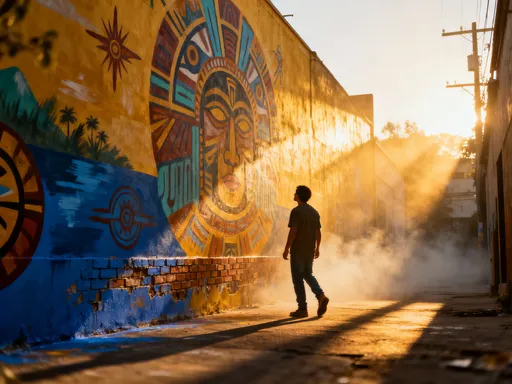
Technically, shooting during rituals requires restraint. Zoom lenses can feel invasive, so I prefer a 35mm or 50mm prime, which forces me to engage at eye level. This not only produces more intimate compositions but also signals that I’m not hiding behind equipment. Natural light is essential—flash disrupts the mood and can be seen as disrespectful. Early morning and late afternoon offer the soft, directional light that enhances texture and emotion, whether it’s the sheen on a drumskin or the shadow of a procession against a yellow wall.
There are times when the camera must stay in the bag. During the most intense moments of a Muharram procession, when men weep openly and voices rise in lament, I’ve chosen to simply stand and observe. That act of restraint has often been rewarded later—when a participant, noticing my respect, invites me to photograph a quiet moment of prayer or a family gathering afterward. Photography in Lucknow’s festivals is not about capturing everything; it’s about knowing when to step forward, when to step back, and when to simply be present.
Golden Hours: Best Light, Best Spots
Lucknow’s magic is most visible in the golden hours—those fleeting windows just after sunrise and before sunset when light wraps the city in warmth and depth. For festival photography, timing is as crucial as location. The midday sun is harsh and flat, bleaching out color and texture, while the soft, slanted rays of morning and evening enhance mood, contrast, and dimension. Planning your movements around these periods can transform ordinary scenes into extraordinary images.
One of the most rewarding times to shoot is early morning in Aminabad, especially in the days leading up to Diwali. As shopkeepers open their shutters, they begin decorating with marigolds, mirrors, and strings of lights. The narrow lanes, still cool and quiet, fill with the scent of fresh paint and incense. The low sun cuts through the alleys at an angle, illuminating dust particles and casting long shadows—perfect for capturing texture and atmosphere. This is also when locals are most relaxed, allowing for candid shots of preparation, conversation, and small rituals.
Another prime location is Rumi Darwaza, especially during evening processions. As the sun dips behind the historic gateway, its sandstone facade glows in amber light, creating a dramatic backdrop for Muharram or Eid processions. The area around the monument becomes a gathering point, where drummers tune their instruments and families wait for the march to begin. The interplay of light and shadow on faces, fabrics, and banners offers endless compositional possibilities. Arriving an hour before sunset allows time to scout angles and settle into a position without disrupting the flow.
The Gomti riverside, though less frequented by tourists, offers serene opportunities for festival photography. During Diwali, families gather to float diyas on the water, their reflections shimmering in the current. At dawn, the riverbank is often empty except for early risers and stray dogs, making it ideal for atmospheric shots. The mist rising off the water, combined with the soft light, creates a dreamlike quality. Meanwhile, the Hazratganj periphery—where colonial-era buildings meet bustling markets—provides a blend of old and new, especially during Eid, when modern fashion meets traditional celebration. Each of these zones offers a distinct visual language, and visiting them during golden hours ensures the most compelling results.
Gear That Works: Minimalism Meets Mobility
When photographing festivals in a city as intimate and fluid as Lucknow, less is often more. The narrow lanes, dense crowds, and spontaneous nature of celebrations demand a lightweight, agile approach. I’ve learned that carrying too much equipment not only slows you down but can also create a barrier between you and the subjects. A bulky camera bag or multiple lenses can make you appear more like a technician than a participant, drawing unwanted attention and limiting access.
My go-to setup is simple: a mirrorless camera, a 35mm f/1.8 prime lens, one spare battery, and a small notebook for jotting down moments or names. The 35mm focal length is ideal—it’s wide enough to capture context but tight enough to isolate details. Its natural field of view mimics human vision, making compositions feel authentic rather than forced. The wide aperture excels in low light, allowing me to shoot handheld during dimly lit processions or indoor gatherings without relying on flash.
Mirrorless cameras offer the added advantage of being quieter than DSLRs, which helps maintain the mood during quiet moments. The absence of a mirror slap means I can capture subtle expressions—eyes closing in prayer, a child’s curious glance—without disturbing the scene. I also keep my camera strap simple and neutral in color, avoiding bright logos or accessories that might stand out.
Perhaps most importantly, minimal gear allows for spontaneity. When a qawwali singer begins an impromptu performance in a courtyard, I can move quickly, change position, and react without fumbling for lenses. When invited into a home for tea, I can set the camera aside without feeling burdened by equipment. This mobility fosters trust and connection—two elements far more valuable than any technical specification. In Lucknow, the best shots often come not from the most advanced tools, but from the freedom to be present.
Beyond the Frame: Connecting With the Moment
Some of my most powerful images from Lucknow were taken not when I was behind the lens, but after I had put the camera down. It was during those moments of genuine connection—sharing a cup of cutting chai with a street vendor, clapping along to a drum circle, or simply sitting in silence during a courtyard gathering—that I was invited deeper into the story. Photography here is not about extraction; it’s about exchange. The more I gave—attention, respect, time—the more I was allowed to see.
I remember one evening during Muharram, I set up near a small mosque where a group of men were preparing for the night’s procession. Instead of shooting immediately, I sat on the steps, watching. After a while, an older man offered me tea. We didn’t speak much, but the gesture opened a door. Later, when the procession began, he nodded toward my camera—a silent permission. The images I captured that night—the folds of a green flag, the reflection of lamplight in wet eyes—are among my most cherished, not because of their technical quality, but because they were born from trust.
This lesson extends beyond photography. Lucknow teaches patience. It teaches that beauty often reveals itself slowly, in the quiet spaces between events. A woman adjusting her dupatta before prayer, a boy learning to play the dholak, the way light falls on a courtyard wall at 5:30 PM—these are not moments you can force. They require stillness, observation, and humility. When you stop chasing the perfect shot and start engaging with the place, the images begin to find you.
For women photographers, especially those traveling solo, this approach is not just artistic—it’s practical. Moving with respect, dressing modestly, and engaging politely allows for deeper access without drawing undue attention. Lucknow is generally welcoming, but cultural sensitivity is key. By prioritizing connection over capture, you not only create better work but also honor the people who make the story possible.
From Lucknow to Your Lens: Why This City Stays With You
Lucknow doesn’t reveal itself all at once. It unfolds in layers, like the folds of a finely embroidered kurta or the verses of a ghazal sung late into the night. Its festivals are not endpoints but invitations—to listen, to witness, to participate. What stays with you long after you’ve left is not just the images you captured, but the feeling of having been allowed in, even briefly, to something real and enduring.
This city teaches photographers to slow down, to seek depth over quantity, and to value the unseen as much as the visible. It challenges the notion that great photography requires grand subjects or perfect conditions. In Lucknow, the most powerful frame might be a shadow on a wall, a hand holding a lamp, or the quiet dignity of a man walking barefoot through the rain. These are not moments that shout; they whisper, and you have to be still to hear them.
For the women who travel with cameras—not just as tourists, but as storytellers—Lucknow offers a rare kind of fulfillment. It’s a place where cultural richness meets human warmth, where tradition is lived, not performed. It reminds us that the best photographs are not taken, but given—offered freely by people who feel seen, not exploited.
So if you’re planning your next journey with a lens in hand, consider Lucknow. Not for the kebabs, though they are divine. Not for the chikankari, though it is exquisite. Come for the light, the color, and the quiet pulse of a city that celebrates life with grace and depth. Let it teach you to see differently—not just with your camera, but with your heart. Because in the end, the most lasting images are those that change the one behind the lens as much as the one in front of it.