You Won’t Believe These Cultural Gems Hiding in Groningen
When I first stepped into Groningen, I expected a quiet Dutch university town—but what I found was a living canvas of history and modern energy. From centuries-old towers to repurposed industrial spaces, the city’s landmark buildings tell stories you can’t help but feel. This is culture not locked in museums, but pulsing through streets and architecture. Let me take you where stone walls whisper and rooftops inspire. Groningen reveals itself not through grand gestures, but in quiet moments: the chime of a carillon at dusk, the reflection of a modern museum in still water, or the warm glow from a converted factory window. It’s a city that honors its past without being bound by it, where every structure—from sacred spire to student-lit study hall—has a role in shaping communal identity. This is more than urban scenery; it’s cultural continuity in motion.
A City That Lives in Its Walls
Groningen is often overlooked by travelers en route to Amsterdam or the tulip fields of the south, yet this northern Dutch city offers a rare blend of historical depth and contemporary vitality. With roots stretching back over nine centuries, Groningen has evolved from a modest medieval settlement into a dynamic cultural capital of the north. Its city plan still reflects the original radial layout centered around the Grote Markt, a design that once served both defense and commerce. Unlike many European cities where history feels curated behind glass, Groningen’s heritage is embedded in daily life. Cobblestone lanes lead to bustling cafés, and ancient church spires rise above bike-filled plazas. The city’s architecture is not merely preserved—it is repurposed, reimagined, and continually revitalized.
What sets Groningen apart is its thoughtful balance between conservation and innovation. After suffering significant damage during World War II, particularly in the surrounding regions, the city undertook careful reconstruction that respected its historical footprint while embracing modern needs. Urban planners prioritized pedestrian access, green spaces, and sustainable infrastructure long before these became global trends. Today, Groningen is renowned for its bicycle-friendly streets—over 60 percent of all trips in the city are made by bike—a testament to its forward-thinking ethos. Yet this progress does not come at the expense of tradition. Instead, new developments often incorporate elements of regional design, such as red brick facades and pitched roofs, ensuring visual harmony across eras.
The city’s identity is also shaped by its status as a major academic center. The University of Groningen, founded in 1614, brings intellectual energy and international diversity to the urban fabric. Students from over 120 countries contribute to a cosmopolitan atmosphere while engaging with local customs and spaces. This interplay between old and new, local and global, gives Groningen a unique cultural rhythm. Whether attending a lecture in a 17th-century hall or sipping coffee beneath a modern glass canopy, residents and visitors alike experience history as a living presence rather than a distant memory. It is this seamless integration of time periods that makes exploring Groningen’s landmarks so profoundly rewarding.
The Grote Kerk: Where Time Stands Still
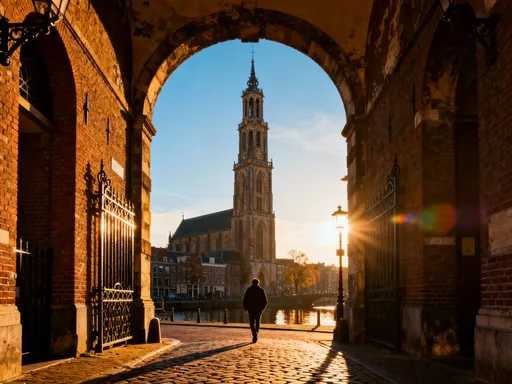
Rising above the rooftops of central Groningen, the Martinikerk—commonly known as the Grote Kerk—stands as a testament to enduring faith, craftsmanship, and civic pride. Construction began in the early 13th century, and though modified over time, its Gothic silhouette remains one of the city’s most iconic features. The church’s tower, completed in the 15th century, soars to nearly 100 meters and houses a carillon of 52 bells that chime regularly, marking hours, holidays, and special occasions. For centuries, this sound has anchored the city’s daily rhythm, offering a sonic thread connecting generations. Even today, the ringing of the bells evokes a sense of continuity, a reminder that some traditions transcend change.
Inside, the church reveals a serene grandeur. High vaulted ceilings, slender columns, and stained-glass windows create an atmosphere of quiet reverence. But the true marvel lies in the Astronomical Clock, installed in 1476 and still fully functional. This intricate timepiece does far more than tell the hour; it displays lunar phases, zodiac signs, feast days, and even the positions of celestial bodies. Crafted by local artisans with remarkable precision, the clock is not just a mechanical achievement but a symbolic bridge between science, religion, and time itself. Every hour, a small procession of figures emerges—a knight, a rooster, and representations of the apostles—adding a touch of whimsy to the sacred space.
Beyond its architectural and historical significance, the Martinikerk is a living cultural venue. Regular organ concerts draw music lovers from across the region, showcasing both classical repertoire and contemporary compositions performed on the church’s magnificent 19th-century instrument. Guided tower climbs offer panoramic views of the city, allowing visitors to trace the spread of red-tiled roofs, winding canals, and green parks. These experiences transform the church from a static monument into an active participant in community life. Locals often gather here not only for worship but for reflection, celebration, and connection. In a world increasingly dominated by digital immediacy, the Grote Kerk offers something rare: a place where time slows, and presence matters.
Groninger Museum: Bold, Bright, and Unapologetically Modern
Just a short walk from the historic center, the Groninger Museum presents a striking contrast to the city’s medieval skyline. Perched on an artificial island surrounded by water, the museum’s avant-garde design feels almost otherworldly. Completed in 1994, the complex was conceived by a collaboration of architects, including Alessandro Mendini, who envisioned a structure that defied convention. Its colorful, fragmented forms—pink towers, zigzag roofs, and glass facades—seem to float above the canal, reflecting shifting light and sky. This bold aesthetic signals the museum’s mission: to challenge expectations and celebrate creativity in all its forms.
More than just a container for art, the Groninger Museum is itself a work of art. Its unconventional layout invites exploration, with interconnected pavilions linked by bridges and walkways. Inside, the exhibition spaces are flexible and dynamic, allowing for a wide range of presentations—from traditional paintings to immersive multimedia installations. The museum’s permanent collection includes regional artifacts, folk art, and historical objects that trace the cultural evolution of Groningen and the surrounding province. However, it is the temporary exhibitions that often capture the most attention, featuring cutting-edge artists, experimental design, and thought-provoking themes that engage with contemporary social issues.
One of the museum’s defining qualities is its commitment to accessibility and inclusivity. Educational programs, family workshops, and multilingual guides ensure that visitors of all ages and backgrounds can connect with the exhibits. Interactive displays encourage hands-on engagement, particularly appealing to younger audiences. Seasonal events, such as open-air film screenings and summer festivals, extend the museum’s reach beyond its walls, turning the surrounding parkland into a vibrant cultural hub. In doing so, the institution fulfills a vital role—not merely preserving culture, but generating it. The Groninger Museum exemplifies how heritage and innovation can coexist, proving that tradition need not be static to be meaningful.
De Porceleyne Fles: A Factory Turned Cultural Icon
On the eastern edge of the city center, a red-brick complex once known for producing fine Delftware pottery has been reborn as a thriving center for creativity and community. De Porceleyne Fles, or “The Porcelain Bottle,” operated as a ceramics factory from the late 19th century until the mid-20th century, crafting elegant blue-and-white tableware that reflected Dutch design sensibilities. When production ceased, the building faced an uncertain future, but instead of demolition, it underwent a thoughtful transformation. Today, it stands as a model of adaptive reuse, housing artist studios, exhibition spaces, event venues, and small businesses—all within the original industrial framework.
The preservation of De Porceleyne Fles honors both its architectural and cultural legacy. Exposed brick walls, timber beams, and large arched windows have been carefully maintained, offering a tangible connection to the past. At the same time, modern interventions—such as updated lighting, climate control, and open-plan layouts—make the space functional for contemporary use. Artists working here span disciplines: painters, sculptors, textile designers, and digital creators all find inspiration in the building’s industrial charm. Regular open studio days invite the public to meet creators, view works in progress, and purchase original pieces directly from makers.
Beyond its role as an artistic enclave, De Porceleyne Fles serves as a gathering place for cultural exchange. Local organizations host lectures, craft markets, and performance nights, drawing diverse crowds and fostering neighborhood engagement. Pop-up restaurants and seasonal food fairs bring culinary innovation into the mix, turning the courtyard into a lively social space. This integration of art, commerce, and community reflects a broader trend in Groningen: the belief that cultural value extends beyond museums and galleries. By repurposing historic buildings for creative use, the city ensures that its industrial heritage remains relevant, not relegated to nostalgia. De Porceleyne Fles is more than a landmark—it is a living ecosystem of expression and connection.
Het Academiegebouw: Tradition in Session
At the heart of the University of Groningen stands Het Academiegebouw, a neoclassical structure completed in 1850 that continues to serve as the ceremonial center of academic life. With its grand portico, Corinthian columns, and symmetrical façade, the building exudes dignity and permanence. Inside, the Aula—the main assembly hall—is a masterpiece of 19th-century craftsmanship. Lined with dark oak paneling, adorned with stained glass, and crowned by an ornate ceiling, the space is reserved for official university events, including inaugural lectures, doctoral defenses, and graduation ceremonies. Stepping into the Aula is like entering a sanctuary of knowledge, where centuries of scholarship seem to echo in the silence.
One of the most enduring traditions held here is the matriculation ceremony for new students, conducted in Latin—a practice that dates back to the university’s founding. While the language may seem archaic, the ritual carries deep symbolic weight, emphasizing continuity, discipline, and the universality of learning. Students don formal attire, receive their enrollment certificates, and participate in a formal procession, connecting them to generations of scholars who came before. These ceremonies are not mere pageantry; they instill a sense of belonging and responsibility, reminding young academics that they are part of a long-standing intellectual lineage.
Yet Het Academiegebouw is not frozen in time. Alongside traditional events, the space hosts public lectures, panel discussions, and cultural performances that engage both the university and the wider community. Exhibits on the history of science, philosophy, and education are often displayed in the surrounding halls, making the building an accessible window into academic heritage. Guided tours allow visitors to explore its architectural details and learn about the university’s contributions to research and society. In this way, the Academiegebouw functions not as a relic, but as a bridge—linking past achievements with present inquiry and future discovery. It stands as a powerful reminder that education is both a personal journey and a collective endeavor.
Beyond the Center: Neighborhood Landmarks With Soul
While much of Groningen’s cultural spotlight focuses on the city center, its residential neighborhoods hold their own quiet architectural treasures. Areas like Oranjewijk, Selwerd, and Tuindorp showcase the city’s postwar commitment to functional, humane urban planning. Designed in the mid-20th century, these districts feature clean lines, ample green space, and thoughtful integration of light and air—hallmarks of Dutch functionalism. Community centers, local libraries, and neighborhood churches were built not as afterthoughts, but as essential components of daily life, reflecting a belief in social equity and collective well-being.
One notable example is the De Opeinde church in Oranjewijk, a modest yet striking building designed with geometric simplicity and symbolic detail. Its stained-glass windows filter sunlight into kaleidoscopic patterns, creating a contemplative atmosphere. Though smaller in scale than the Grote Kerk, it plays a vital role in fostering local identity and spiritual connection. Similarly, the Selwerd neighborhood includes a community hall that hosts everything from yoga classes to parent-child music groups, reinforcing the idea that architecture should serve people, not just aesthetics.
These spaces may lack the grandeur of historic landmarks, but they embody a different kind of cultural significance—one rooted in everyday life. Children play in tree-lined courtyards, neighbors meet at corner bakeries, and seniors gather in sunlit community rooms. The design of these neighborhoods prioritizes walkability, safety, and social interaction, principles that remain relevant in today’s urban conversations. By preserving and maintaining these areas with care, Groningen affirms that culture is not confined to museums or monuments. It lives in the fabric of ordinary places, shaped by how people live, connect, and grow together.
Walking the Line Between Past and Future
Groningen’s approach to heritage is neither nostalgic nor dismissive; it is dialogic. The city recognizes that landmark buildings are not merely artifacts to be protected, but active participants in shaping civic identity. Municipal initiatives reflect this philosophy, blending sustainability with historical sensitivity. Restoration projects often incorporate energy-efficient technologies—such as improved insulation, solar panels, and geothermal heating—without compromising architectural integrity. Historic facades are preserved while interiors are adapted for modern use, ensuring that buildings remain functional and economically viable.
Public art plays a growing role in this cultural dialogue. Murals, sculptures, and light installations are integrated into older structures, creating dynamic juxtapositions that spark conversation. A medieval wall might display a digital projection, or a 19th-century gateway could frame a contemporary sculpture. These interventions do not erase history; they enrich it, inviting viewers to see familiar spaces with fresh eyes. The city also supports temporary art programs that transform vacant buildings into experimental galleries, further blurring the line between preservation and innovation.
Urban planning in Groningen continues to prioritize people over vehicles, with ongoing expansions of pedestrian zones and green corridors. New developments are required to undergo cultural impact assessments, ensuring that construction respects the historical and social context of each neighborhood. This holistic approach reflects a deep understanding: that a city’s soul resides not just in its monuments, but in how it treats them. By investing in both preservation and progress, Groningen sets an example for other historic cities navigating the complexities of modernization. The result is a place where the past is not buried, but built upon—with care, creativity, and collective vision.
Groningen doesn’t just preserve its past—it converses with it. Every landmark building is a chapter in an ongoing story of resilience, creativity, and community. By walking its streets, you’re not just sightseeing; you’re joining a cultural journey centuries in the making. The real magic? It’s still being written.