You Won’t Believe What I Found in Da Nang’s Hidden Markets
Da Nang isn’t just about beaches and bridges—it’s a shopping paradise hiding in plain sight. I went in looking for souvenirs and walked out with stories, secrets, and a suitcase full of local gems. From bustling street markets to quiet craft alleys, the city’s shopping scene is vibrant, authentic, and totally underrated. This is not your average tourist run; it’s a real, sensory-rich journey through Vietnamese culture, one bargain at a time. The scent of lemongrass and grilled rice paper mingles with the rustle of silk and the clink of ceramic bowls. Every alleyway hums with quiet commerce, every vendor shares a smile or a story. In Da Nang, shopping becomes more than transaction—it becomes memory, connection, and discovery.
First Impressions: When Shopping Becomes an Adventure
Arriving in Da Nang, the city greets visitors with a skyline that balances modern elegance and coastal charm. Towering apartment complexes reflect the glow of the South China Sea, while motorbikes weave through narrow streets where laundry flutters between buildings like colorful flags. At first glance, Da Nang appears to be a city in motion—progressive, polished, and polished for tourism. Yet, beneath this surface lies a different rhythm, one that pulses through the open-air markets and neighborhood stalls where daily life unfolds in full color and sound.
Many travelers arrive with expectations shaped by guidebooks and social media—picturesque beaches, the famous Dragon Bridge, and perhaps a quick stop at a souvenir shop near My Khe. But those who venture beyond the postcard sights quickly realize that Da Nang’s soul isn’t found in glossy malls or chain stores. It lives in the early-morning hustle of wet markets, where baskets overflow with starfruit, dragon fruit, and bundles of fresh herbs tied with raffia. It resonates in the call of vendors hawking steaming bowls of mi quang, their voices rising above the chatter of bargaining and the sizzle of street grills.
What sets Da Nang’s shopping experience apart is its authenticity. Unlike curated tourist bazaars where prices are fixed and interactions feel performative, here, commerce is intimate and spontaneous. A simple question about price often leads to a conversation about family, a recipe, or a recommendation for the best banh mi in the district. This isn’t shopping as consumerism; it’s shopping as cultural immersion. The experience engages all senses—the sharp tang of fermented fish sauce, the cool weight of hand-carved wood, the vibrant dyes of handwoven fabrics—all contributing to a deeper understanding of Vietnamese daily life.
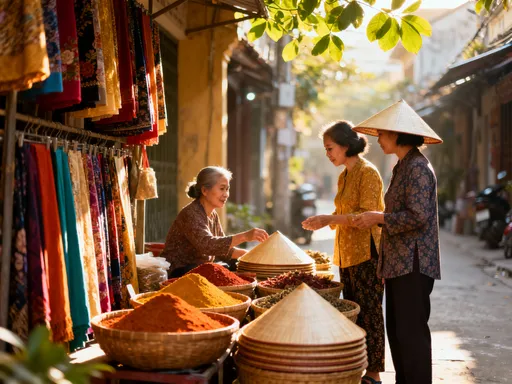
And then there are the discoveries—unexpected, unplanned, unforgettable. A hand-painted lantern tucked between baskets of mangoes. A grandmother selling embroidered handkerchiefs from a folding stool. A stall where artisans shape conical hats under a tarp, their fingers moving with practiced ease. These moments transform a routine errand into an adventure, reminding travelers that some of the richest experiences come not from grand attractions, but from the quiet corners where life happens naturally.
Con Market: More Than Just a Market—It’s a Lifestyle
At the heart of Da Nang’s shopping culture lies Con Market, a sprawling, multi-level complex that functions as both a commercial hub and a community center. Located near the Han River, just a short walk from the city center, Con Market opens before dawn and doesn’t quiet down until late evening. It’s not a destination for the faint-hearted—navigating its narrow aisles requires patience, awareness, and a willingness to embrace the chaos. But for those who do, the rewards are immense.
What makes Con Market different from typical tourist-oriented bazaars is its dual role: it serves both locals and visitors. While foreign travelers browse for silk scarves and lacquerware, Vietnamese families shop for dinner ingredients, school supplies, and household goods. This blend creates an atmosphere of genuine utility, where every transaction has purpose. You won’t find staged performances or overpriced trinkets here—just real people doing real shopping, with the occasional curious glance at a foreigner examining a basket of kumquats.
The market is divided into clear sections, each with its own rhythm and sensory signature. The ground floor is dominated by fresh produce—pyramids of pineapples, mounds of shallots, and trays of live shrimp wriggling in shallow tanks. Nearby, butchers display cuts of pork and duck, while fishmongers expertly scale and clean their catch on marble slabs. The air is thick with the earthy scent of vegetables and the briny freshness of seafood, a reminder that food remains central to Vietnamese culture.
Ascend to the upper levels, and the offerings shift to dry goods and crafts. Here, you’ll find bolts of silk in jewel-toned hues, hand-stitched linen tablecloths, and shelves lined with ceramic teapots and wooden carvings. One corner specializes in traditional ao dai fabrics, where tailors take measurements on the spot and promise delivery in two days. Another stall sells handmade incense and herbal remedies, their shelves stacked with jars of dried roots and blossoms. Prices are modest, and bargaining is expected—but not aggressive. A polite smile and a gentle counteroffer are often met with laughter and compromise.
Perhaps the most memorable aspect of Con Market is the warmth of its vendors. Many have worked here for decades, their stalls passed down through generations. Language barriers exist, but communication happens through gestures, shared laughter, and the universal language of hospitality. One elderly woman, selling hand-rolled rice paper, insisted on giving a small packet as a gift after learning it was my first time in Vietnam. “For good luck,” she said through a translator. Moments like these transform a simple purchase into a human connection, reinforcing the idea that shopping here is as much about relationships as it is about goods.
Hidden Alleys and Secret Stalls: Off-the-Beaten-Path Finds
Beyond the structured lanes of Con Market and Han Market, Da Nang reveals another layer of shopping magic in its hidden alleys and residential side streets. These are not marked on tourist maps, nor do they appear in travel brochures. Yet, they are where some of the city’s most unique treasures can be found—crafted by local artists, sewn in home workshops, and sold from folding tables under shaded awnings.
Wandering through neighborhoods near the French Quarter or along the banks of the Han River, one might stumble upon a young designer selling hand-dyed scarves made with natural indigo. Another alley hosts a collective of women creating delicate paper lanterns, their frames made from bamboo and their surfaces painted with lotus blossoms and dragon motifs. These are not mass-produced souvenirs—they are expressions of identity, heritage, and creativity, each piece bearing the mark of its maker.
Streetwear has also found a home in these quiet corners. Local fashion students and independent designers use these spaces to test their collections, offering affordable, stylish pieces that blend traditional Vietnamese elements with modern silhouettes. Think linen shirts embroidered with folk patterns, denim jackets patched with silk remnants, or tote bags printed with vintage Da Nang postcards. These items are not only wearable art but also conversation starters—reminders of a trip that went beyond the expected.
One of the joys of shopping in these hidden spots is the absence of pressure. Vendors welcome browsers, understanding that discovery takes time. Bargaining is still part of the process, but it feels fair and unhurried. Prices are often lower than in central markets, not because the goods are inferior, but because overhead is minimal. A hand-stitched shoulder bag might cost the equivalent of ten dollars, not because it’s undervalued, but because the artisan values expression over profit.
Among the most treasured finds are the handmade crafts: bamboo wind chimes that sing in the coastal breeze, fans painted with scenes of rice paddies and water buffaloes, and small wooden boxes inlaid with mother-of-pearl. These objects carry the weight of tradition, yet they feel fresh and relevant. They are not relics of the past but living extensions of Vietnamese craftsmanship, adapted for modern life. Purchasing one is not just an acquisition—it’s a gesture of support for local creativity and cultural preservation.
From Street to Store: The Evolution of Da Nang’s Retail Scene
As Da Nang continues to grow, its retail landscape is evolving. Alongside traditional markets, modern shopping malls like Vincom Plaza and Lotte Mart have emerged, offering air-conditioned comfort, international brands, and the convenience of one-stop shopping. These spaces cater to both locals seeking variety and tourists looking for familiar products. Yet, rather than replacing the old, they coexist with it, creating a layered shopping culture where tradition and modernity blend seamlessly.
The contrast between these two worlds is striking. In the mall, shoppers move in silence, scanning barcodes and paying with cards. Lighting is bright, aisles are wide, and choices are organized by brand and category. In the street market, the experience is sensory and social—cash changes hands, goods are weighed on analog scales, and conversations unfold over shared cups of tea. One prioritizes efficiency; the other, experience.
Yet, many residents navigate both with ease. A mother might buy imported baby formula at Lotte Mart in the morning and return in the afternoon to Con Market for fresh herbs and handmade noodles. A young professional may wear a Zara dress to work but drape a handwoven shawl over her shoulders for evening outings. This duality reflects a broader cultural balance—honoring progress while preserving heritage.
Social media has also played a role in shaping new shopping behaviors. Platforms like Facebook and Instagram have become virtual marketplaces, where small artisans promote their work, share behind-the-scenes glimpses of their process, and connect with customers across Vietnam and beyond. A ceramicist in Da Nang can now sell to a buyer in Hanoi without leaving her studio, thanks to local delivery services and online payment systems. This digital shift has empowered micro-entrepreneurs, particularly women, to sustain traditional crafts in a competitive economy.
Still, the physical market remains irreplaceable. There is something profound about holding a piece of silk before buying it, feeling its weight, seeing how it catches the light. Online shopping lacks the immediacy of scent, touch, and human interaction. In Da Nang, the coexistence of old and new retail forms offers travelers a fuller picture of how commerce functions in a society that values both innovation and authenticity.
Craftsmanship Behind the Goods: Meeting the Makers
To truly understand Da Nang’s shopping culture, one must go beyond the market stalls and visit the workshops where goods are made. A short drive from the city center leads to a cluster of family-run studios specializing in traditional crafts—conical hats, silk weaving, and wood carving. These spaces are not tourist attractions with staged demonstrations; they are working environments where skill is passed from parent to child and every piece is made by hand.
One such workshop produces non la, the iconic conical hats worn throughout Vietnam. Inside a modest open-air shed, women bend over frames made from young bamboo strips, weaving layers of palm leaves with precision. Each hat takes several days to complete, from shaping the frame to sealing the surface with rice paste. The process is labor-intensive, yet the final price remains low—often less than five dollars. This is not due to lack of value, but because the artisans prioritize accessibility and tradition over profit.
Similarly, a nearby silk studio operates on principles of sustainability and heritage. Mulberry leaves are grown to feed silkworms, cocoons are carefully unraveled, and threads are dyed using natural pigments—turmeric for yellow, indigo for blue, betel nut for brown. The looms are manual, the pace is slow, and the output is limited. Yet, the quality is exceptional—soft, lustrous, and imbued with the care of its makers.
What stands out in these workshops is the transparency of pricing. Artisans openly explain their costs: the price of materials, the hours of labor, the tools required. They do not inflate prices for foreigners. Instead, they welcome questions and often offer demonstrations. Buying directly from them feels meaningful—not just because the product is authentic, but because the transaction acknowledges the human effort behind it.
For many travelers, this connection transforms the act of purchasing. A silk scarf is no longer just a souvenir; it becomes a symbol of resilience, of a craft that endures despite industrialization. It carries the story of the woman who wove it, the family that sustains the tradition, and the community that values handmade over mass-produced. In a world of fast fashion and disposable goods, this kind of shopping feels like a quiet act of resistance—a choice to support dignity, skill, and cultural continuity.
Smart Shopping: Practical Tips That Actually Work
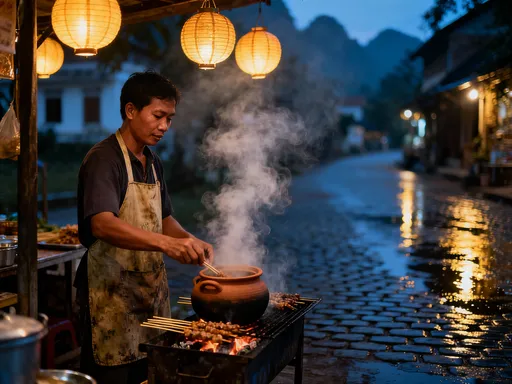
To make the most of Da Nang’s shopping culture, a few practical strategies can enhance both the experience and the outcomes. Timing matters: arriving at markets like Con or Han early in the morning ensures the freshest produce, cooler temperatures, and fewer crowds. By midday, the heat intensifies, and some vendors begin to pack up. Evening visits, however, offer a different charm—the buzz of dinner preparations, the glow of lanterns, and the chance to sample street food while browsing.
Cash is still king in most markets, particularly smaller stalls and alley vendors. While some larger shops accept cards, having small bills in Vietnamese dong (10,000 to 50,000 denominations) makes transactions smoother and shows respect for local norms. A reusable cloth bag is also essential—plastic bags are widely used but increasingly discouraged, and carrying your own bag signals mindfulness of environmental concerns.
Engaging respectfully with vendors enhances the experience. Learning a few basic Vietnamese phrases—such as “bao nhieu tien?” (how much?), “cam on” (thank you), and “duoc roi” (okay, that’s fine)—goes a long way. A smile and a polite tone often lead to better interactions, discounts, or even small gifts. Avoid pointing or touching goods without permission; instead, ask to see an item with a gentle gesture.
Recognizing quality requires attention. For handmade crafts, look for irregularities—slight variations in stitching, natural dye gradients, or hand-carved imperfections. These are signs of authenticity, not flaws. Mass-produced imports, on the other hand, tend to be uniform, overly bright, and lightweight. When in doubt, ask about the origin: “Làm ở đâu?” (made where?) can reveal whether an item is local or imported.
Finally, shop with intention. Da Nang offers countless temptations, but the most meaningful purchases are those that resonate personally—a piece that fits your life, reflects your values, or carries a memory. Resist the urge to collect everything. Instead, choose a few items with care, knowing each supports a real person and a living tradition.
Why Da Nang’s Shopping Experience Stays With You
Months after returning home, the souvenirs from Da Nang continue to spark reflection. A hand-painted fan hangs near the window, catching the breeze. A silk scarf is worn on special occasions, its colors still vibrant. A bamboo box holds letters and keepsakes, its surface smoothed by time and touch. These objects are more than decorations—they are vessels of memory, each tied to a moment, a person, a place.
What makes Da Nang’s shopping culture so enduring is its depth. It is not about accumulating things, but about collecting experiences. The act of choosing a gift from a grandmother’s stall, learning how a hat is woven, or sharing tea with a silk maker—these moments create emotional imprints that outlast the physical items. They shape how we remember a place, not as a checklist of sights, but as a tapestry of human connection.
In a world of fast tourism—where destinations are consumed in days and memories fade quickly—Da Nang offers something different. It invites travelers to slow down, to engage with the present, to see shopping not as a chore but as a form of storytelling. Every purchase becomes a chapter in a personal journey, a way of participating in a culture rather than merely observing it.
This side of Da Nang reshapes expectations. It challenges the notion that travel must be about grand monuments or adrenaline-fueled adventures. Sometimes, the most profound experiences come from quiet exchanges in a market alley, from the weight of a hand-carved spoon, from the smile of a vendor who remembers your face. It teaches mindfulness—not just in spending, but in seeing, listening, and being present.
And so, the invitation remains: to explore deeper, to spend not just money but attention, to return home not only with bags full of treasures, but with a renewed sense of connection. In Da Nang, shopping is not the end goal—it is the path to understanding. And sometimes, the most valuable thing you bring back isn’t something you can pack. It’s a new way of seeing the world, one market at a time.