You Won’t Believe These Hidden Cultural Gems in Sabah
If you think Sabah is just about Mount Kinabalu and orangutans, think again. I was surprised too—until I stumbled upon vibrant villages, age-old traditions, and festivals bursting with color and soul. This corner of Malaysia isn’t just scenic; it’s deeply spiritual and culturally rich. From Kadazandusun harvest dances to handmade beadwork that tells stories, Sabah’s heritage is alive. This isn’t your average travel guide—it’s a real look at how culture shapes this destination in ways you’ve probably never imagined.
Discovering Sabah’s Cultural Soul Beyond the Postcards
Sabah, located on the northern tip of Borneo, is often celebrated for its emerald rainforests, misty highlands, and pristine coral reefs. Yet beneath its natural beauty lies a cultural tapestry woven with over 30 distinct ethnic communities, each contributing to a living heritage that transcends tourist brochures. While many travelers arrive with cameras pointed toward Mount Kinabalu or Sepilok’s orangutans, the true essence of Sabah reveals itself in the rhythm of village life, the warmth of shared meals, and the quiet dignity of ancestral customs. This is a place where tradition isn’t preserved behind glass—it’s practiced daily, passed down through generations, and shared with openness and pride.
The Kadazandusun, Bajau, and Murut are among the largest indigenous groups, but dozens of smaller communities also contribute to Sabah’s cultural mosaic. In the highland villages near Kundasang, mornings begin with the soft murmur of greetings in Dusun, while children walk to school along paths lined with terraced rice fields. In coastal settlements like Semporna, the Bajau Laut—often called “sea nomads”—still navigate the waters in wooden lepa boats, their lives shaped by tides and tradition. These communities are not frozen in time; they are dynamic, adapting to modernity while fiercely protecting their identity. Understanding this balance is key to appreciating Sabah beyond its postcard-perfect landscapes.
For the thoughtful traveler, immersing in Sabah’s culture transforms a simple vacation into a journey of connection. It shifts the focus from seeing to understanding, from collecting photos to building empathy. When you learn to greet a village elder with a gentle nod and a soft-spoken "selamat pagi," or when you sit cross-legged on a bamboo mat sharing stories over a meal, you begin to experience Sabah as more than a destination—you feel part of its story. This kind of travel doesn’t require grand gestures; it begins with curiosity, respect, and a willingness to listen. And in return, Sabah offers something rare: authenticity in a world that often feels increasingly staged.
The Kadazandusun and the Spirit of the Harvest Festival (Pesta Kaamatan)
No event captures the soul of Sabah quite like Pesta Kaamatan, the annual harvest festival celebrated with deep reverence by the Kadazandusun people. Held every May, this multi-day celebration honors the rice spirit, known as Bambaazon, and gives thanks for a bountiful harvest. Far from a tourist spectacle, Kaamatan is a spiritual and communal milestone, blending ancient animist beliefs with joyful festivity. The festival’s heart lies in Penampang and Putatan, where villages come alive with music, dance, and rituals that have endured for centuries.
One of the most iconic moments of Kaamatan is the crowning of the Unduk Ngadau, or Harvest Queen. Selected through a pageant that emphasizes grace, knowledge of tradition, and cultural pride, the queen embodies the spirit of gratitude and fertility. Her coronation is not about glamour but symbolism—a recognition of women’s vital role in agriculture and community life. Alongside this, the Sumazau dance takes center stage: dancers move with arms outstretched and feet gliding in rhythmic unison, mimicking the flight of birds over rice fields. The gentle sway of their hands and the hypnotic beat of gandang drums create a mesmerizing tableau of harmony between people and land.
Equally significant are the spiritual rituals led by the bobohizan, the traditional priestesses who serve as intermediaries between the physical and spirit worlds. The Magavau ceremony, performed at the start of the harvest season, involves chants, offerings of rice wine, and prayers for protection and prosperity. Though fewer bobohizans remain today, their presence during Kaamatan is a powerful reminder of the Kadazandusun’s enduring spiritual connection to nature. Travelers are welcome to observe these ceremonies, but participation requires humility and respect. Removing shoes before entering sacred spaces, dressing modestly, and refraining from flash photography are small gestures that show deep appreciation.
For those planning a visit, timing is essential. The main festivities peak around May 30–31, with public events in Kota Kinabalu’s Padang Merdeka and smaller, more intimate gatherings in rural villages. Attending a Kaamatan celebration is not just about witnessing tradition—it’s about feeling the pulse of a culture that measures time not by clocks, but by seasons, harvests, and shared gratitude. It’s a reminder that in Sabah, celebration is not escapism; it’s a sacred act of remembrance and renewal.
Living Culture: Visiting Traditional Villages and Longhouses
To truly understand Sabah’s heritage, one must step into its villages—places where tradition is not performed for visitors, but lived with quiet pride. Cultural villages like Monsopiad Heritage Village in Penampang and Mari-Mari Cultural Village near Kota Kinabalu offer immersive experiences that go far beyond museum displays. Here, history breathes through wooden longhouses, ancestral weapons, and oral stories passed down through generations. These are not staged reenactments; they are carefully curated spaces where elders share their knowledge, and younger members keep customs alive.
At Monsopiad, named after a legendary warrior, visitors walk through a reconstructed village surrounded by lush greenery. The centerpiece is the traditional Kadazandusun longhouse, elevated on stilts with a communal veranda where families once gathered for meals and storytelling. Guides explain the significance of the buffalo horn-adorned entrance—a symbol of strength and status—and demonstrate how blowpipes were used for hunting. One of the most striking exhibits is the skull pillar, a historical practice where enemy heads were displayed after tribal conflicts. While this custom no longer exists, its inclusion serves as an honest reflection of the past, not a glorification, but an acknowledgment of cultural evolution.
Mari-Mari Cultural Village offers a broader perspective, showcasing the traditions of five major ethnic groups: Kadazandusun, Bajau, Murut, Rungus, and Lundayeh. The experience unfolds in stages: visitors are welcomed with a traditional drink made from rice wine, then guided through demonstrations of fire-making, blowpipe shooting, and tribal tattooing. The Rungus longhouse, with its distinctive bamboo walls and intricate beadwork, offers insight into the craftsmanship and communal living of this northern Sabah community. Meanwhile, the Murut section highlights warrior dances and the use of the mandau, a traditional sword carried during ceremonies.
These villages are more than tourist attractions—they are centers of cultural preservation. Entrance fees support local employment, education, and heritage programs, ensuring that traditions are not lost to modernization. For visitors, the experience is both educational and humbling. It’s one thing to read about a culture, but quite another to taste rice wine offered with a smile, to try your hand at weaving bamboo strips, or to hear an elder sing a lullaby in a language that has no written form. The key to meaningful engagement is respect: asking permission before taking photographs, listening more than speaking, and recognizing that you are a guest in someone’s living history.
Handicrafts That Tell Stories: From Beads to Weaving
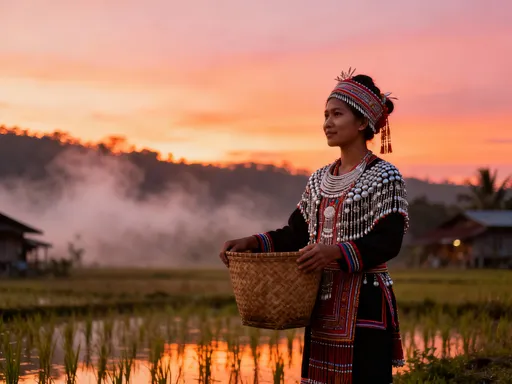
In Sabah, handicrafts are not mere souvenirs—they are expressions of identity, history, and resilience. Every bead, weave, and carved motif carries meaning, often telling stories of ancestry, nature, or spiritual beliefs. The Rungus people of northern Sabah are especially renowned for their intricate beadwork, creating necklaces, belts, and ceremonial attire adorned with geometric patterns in red, black, and white. These designs are not random; they symbolize elements like rivers, mountains, or protective spirits, passed down through maternal lines and worn during festivals and rites of passage.
Basket weaving is another cornerstone of Sabah’s artisanal heritage. Using rattan, bamboo, and pandanus leaves, women in villages like Kudat and Tambunan craft containers that are both functional and beautiful. The process is labor-intensive: fibers are soaked, dyed with natural pigments, and woven into tight, durable patterns. These baskets once carried rice, tools, and even infants, serving as essential items in daily life. Today, they are cherished as cultural artifacts and practical keepsakes. Travelers can observe this craft firsthand at local cooperatives or during homestay programs, where artisans welcome questions and often allow visitors to try simple weaving techniques under guidance.
Bamboo is also transformed into musical instruments, such as the sompoton, a traditional flute-like instrument with multiple pipes that produces haunting, melodic tones. Often played during celebrations, the sumpotan connects music to memory, with each tune evoking specific stories or emotions. In Kota Kinabalu’s Gaya Street Sunday Market, visitors can find authentic pieces from local artisans, but discernment is key. Mass-produced imitations are common, so supporting certified cooperatives or fair-trade shops ensures that purchases directly benefit the makers.
Buying handicrafts in Sabah is more than a transaction—it’s an act of cultural solidarity. When you choose to invest in handmade beadwork or a handwoven basket, you help sustain livelihoods and encourage the transmission of skills to younger generations. It’s a quiet way to honor tradition, one that doesn’t require grand gestures but does require intention. These crafts are not relics; they are living art forms, evolving with time yet rooted in centuries of wisdom. To carry one home is to carry a piece of Sabah’s soul.
Culinary Traditions: Eating Like a Local
To taste Sabah is to understand its soul. The region’s cuisine is a reflection of its geography, climate, and cultural diversity—simple in presentation, yet rich in flavor and meaning. Unlike the heavily spiced dishes of mainland Malaysia, Sabah’s food emphasizes freshness, balance, and the natural taste of ingredients. Hinava, a Kadazandusun delicacy, exemplifies this: raw mackerel or tuna is marinated in lime juice, sliced shallots, ginger, and chili, creating a dish that is tangy, spicy, and refreshingly light. It’s often served during celebrations, symbolizing abundance and the sea’s generosity.
Tuhau, pickled wild ginger stem, is another distinctive flavor unique to Sabah. With its sharp, pungent bite, it’s commonly eaten as a condiment alongside rice and grilled fish. Though an acquired taste, it’s deeply cherished by locals and often shared during family gatherings. Bamboo-cooked rice, or nuba laya, is another staple—glutinous rice steamed inside bamboo tubes over an open fire, absorbing the smoky aroma of the wood. This method, once used by farmers in the fields, is now a beloved feature of festive meals and cultural demonstrations.
For a full culinary immersion, visitors should explore family-run warungs (eateries), night markets, or village homestays. In Kota Kinabalu, the Sinseh Street night market offers a wide array of local dishes, from sizzling satay to fresh seafood grilled over charcoal. But the most authentic experiences often happen off the beaten path—like sharing a meal in a longhouse kitchen, where food is served on banana leaves and eaten with the right hand, a practice that fosters closeness and mindfulness.
Food in Sabah is also deeply tied to ritual. During Kaamatan, rice wine known as lihing is brewed and shared in communal jars, symbolizing unity and gratitude. In Murut communities, wild boar is traditionally served during ceremonies, honoring the hunter’s skill and the animal’s spirit. Even everyday meals follow unspoken etiquette: finishing your plate shows appreciation, while leaving a small amount indicates respect for the host’s generosity. To eat in Sabah is not just to satisfy hunger—it is to participate in a culture where food is memory, offering, and connection.
Festivals and Seasonal Rhythms Across Sabah
While Pesta Kaamatan is the most widely recognized celebration, Sabah’s cultural calendar is rich with seasonal festivals that reflect the diverse rhythms of its communities. Each event is a window into local identity, blending tradition, artistry, and communal joy. One of the most visually stunning is the Bajau Water Festival, or Regatta Lepa, held annually in Semporna. This vibrant event sees the Bajau Laut community—historically sea-dwelling people—decorate their wooden lepa boats with colorful flags, fringes, and intricate carvings. The boats parade through the harbor in a dazzling display of craftsmanship and pride, accompanied by music, dancing, and feasting on shore.
Regatta Lepa is more than a spectacle; it’s a reaffirmation of maritime heritage. For generations, the Bajau have lived in stilt houses or on boats, navigating the waters between Sabah, the southern Philippines, and eastern Indonesia. The festival honors their seafaring skills, boat-building traditions, and deep connection to the ocean. Visitors are encouraged to watch from designated viewing areas, respecting the sacredness of certain rituals while enjoying the festive atmosphere. Local guides often provide context, explaining the symbolism behind boat designs and the significance of specific chants and dances.
In the interior highlands, the Murut people celebrate with events that highlight their warrior traditions and agricultural roots. Though less publicized, Murut festivals often include blowpipe competitions, where men demonstrate precision and strength, and warrior dances performed in full ceremonial attire—feathered headdresses, bead necklaces, and hand-carved shields. These gatherings are typically community-based, held in longhouses or village compounds, and may not be widely advertised. However, with proper introductions and respectful inquiry, travelers can sometimes attend as honored guests, especially through homestay programs or cultural tours.
Timing a visit around these festivals requires planning, but the rewards are profound. Experiencing Regatta Lepa at sunrise, with the sea glowing under fluttering banners, or witnessing a Murut dance under the stars, drums echoing through the jungle, creates memories that linger far beyond the trip. These events are not staged for tourism; they are genuine expressions of identity, held with pride and purpose. For the culturally curious traveler, they offer rare access to the heartbeat of Sabah—rhythmic, vibrant, and deeply rooted.
Traveling with Respect: How to Engage Culturally Without Overstepping
Cultural tourism in Sabah is a privilege, not a right. As interest in authentic experiences grows, so does the responsibility to engage with humility and awareness. The difference between respectful participation and cultural appropriation often lies in intention, behavior, and willingness to learn. The first step is recognizing that you are entering living communities, not theme parks. These traditions are not performances for entertainment; they are sacred practices tied to identity, history, and spirituality.
Dress modestly when visiting villages or attending ceremonies. Shoulders and knees should be covered, and footwear removed before entering homes or sacred spaces. When photographing people, always ask permission—especially elders or children. A smile and a simple "Boleh saya ambil gambar?" (Can I take a photo?) go a long way. If the answer is no, accept it gracefully. Respect also means refraining from touching ceremonial objects, mimicking rituals without guidance, or treating cultural elements as props for selfies.
Learning a few words in local dialects—such as "Kumustahan?" (Hello) in Dusun or "Sama" (Thank you) in Bajau—demonstrates genuine interest and fosters connection. Engaging with local guides, staying in community-run homestays, and purchasing directly from artisans ensure that tourism benefits the people whose culture you are experiencing. Avoid bargaining aggressively in markets; prices are often fair and reflect hours of labor.
Most importantly, approach Sabah with an open heart and a listening mind. Ask questions respectfully, but don’t demand explanations. Observe more than you speak. Let the experience unfold naturally. True cultural exchange is not about taking, but about receiving with gratitude. When you leave Sabah, the goal isn’t just to have collected photos or souvenirs, but to carry a deeper understanding of a way of life that values community, gratitude, and harmony with nature.
Conclusion
Sabah’s culture isn’t performative—it’s lived, protected, and proudly shared. By stepping beyond the trails and into its villages, festivals, and kitchens, travelers don’t just see a destination; they connect with its soul. The real adventure isn’t just reaching Sabah—it’s letting Sabah change you. From the quiet dignity of a Rungus elder weaving beads into a necklace, to the thunderous beat of drums during a Murut dance, every moment offers a chance to witness resilience, beauty, and humanity in its most authentic form. This is not travel as escape, but travel as transformation. And in a world that often feels disconnected, Sabah reminds us that culture—when honored, respected, and shared—has the power to bring us closer to one another, and to ourselves.